

I Inherited a House in Omaha Nebraska, Now What Should I Do?
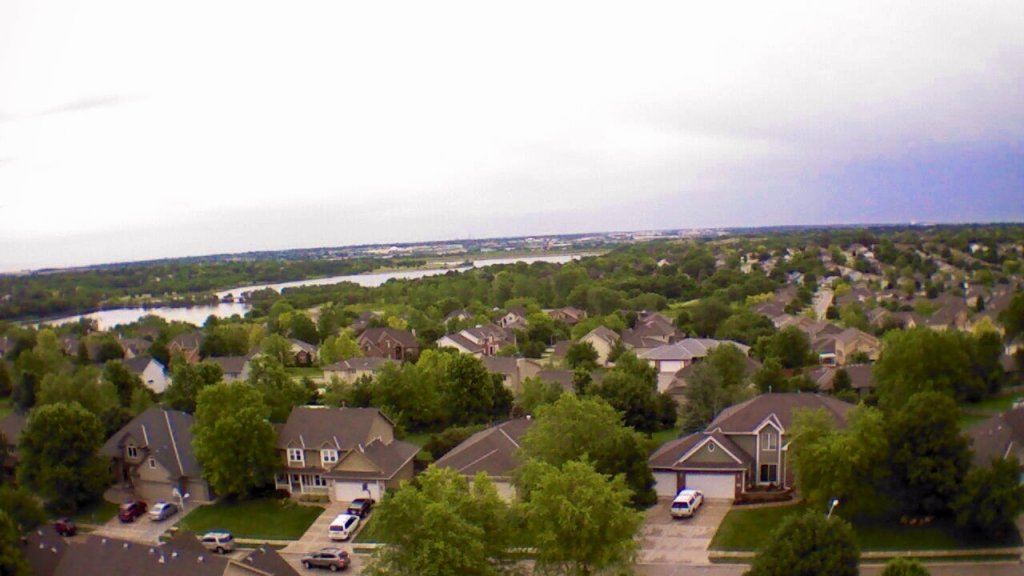
When you inherit a house in Omaha, your three main options are selling it, renting it, or moving in. The most important financial factor most heirs overlook is the stepped-up basis: your tax basis resets to the fair market value at the date of the original owner’s death, which means heirs who sell shortly after inheriting typically owe $0 in federal capital gains tax on the appreciation that occurred during the prior owner’s lifetime. Before choosing rent vs. sell, verify who has legal authority to act (executor or personal representative under Nebraska probate), whether co-heirs must agree, the current rental income potential vs. immediate sale proceeds, and the property’s condition relative to what each option requires.
The Decision Most Omaha Heirs Get Wrong
Inheriting a house in Omaha is almost always emotionally complex. When the practical decisions arrive — sell it, rent it, move in — they tend to arrive fast, often before the estate is even settled. Most heirs make this decision without understanding the single most important financial fact about inherited property: the stepped-up basis. Getting this wrong can cost tens of thousands of dollars in unnecessary capital gains taxes, or in missed rental income, or in carrying costs on a property that sits unsold for months.
This guide walks through each option with real financial analysis so you can make an informed decision. If you have already decided to sell and want to understand the process, see how 7 Days Cash helps Omaha heirs sell inherited properties quickly and cleanly — without agents, commissions, or repairs.
Start Here: The Stepped-Up Basis Tax Advantage (Most Heirs Don’t Know This)
The stepped-up basis is the single most important tax concept for anyone who has inherited real estate. Here is how it works:
When you inherit a property, your tax basis — the amount used to calculate capital gains if you sell — is reset to the fair market value of the property on the date of the original owner’s death. This is called a “step-up in basis.” It erases all the appreciation that occurred during the prior owner’s lifetime for capital gains tax purposes.
Example: Your parent purchased a home in Omaha in 1985 for $65,000. At the time of their death, the home is worth $285,000. You inherit the property. Your stepped-up basis is $285,000 — not $65,000. If you sell the home for $285,000 shortly after inheriting, your capital gain is $0. The $220,000 in appreciation that occurred over 35+ years is completely excluded from capital gains tax through the step-up.
If instead you had received the home as a gift while the owner was alive, you would inherit their original $65,000 basis — and owe capital gains tax on the full $220,000 gain when you sell. This is why inheriting property is tax-advantaged compared to receiving it as a gift.
The Holding Period Wrinkle
Inherited property automatically qualifies as long-term capital gains regardless of how long you personally hold it before selling. Long-term capital gains rates (0%, 15%, or 20% depending on income) apply from day one. However, if the property appreciates after you inherit it and you sell later, you will owe capital gains tax on the post-inheritance appreciation only.
Key implication: selling shortly after inheriting — when the sale price is at or near the stepped-up basis — is the most tax-efficient time to sell an inherited Omaha home. The longer you hold the property, the more post-inheritance appreciation accumulates, and the larger the capital gains exposure grows. Talk to a CPA or estate tax attorney before making this decision. Understanding the full cost of selling a property in Nebraska helps you factor taxes alongside commission, repairs, and carrying costs.
Before Deciding: Who Has Legal Authority to Act on the Property?
Before any decision about the inherited Omaha property can be executed, you must establish who has legal authority to sell or lease it. This depends on whether the prior owner died with a will (testate) or without one (intestate), and whether the estate must go through Nebraska probate.
If There Is a Will
The will names an executor (now formally called “personal representative” in Nebraska). The personal representative has authority to manage the estate’s assets, including real property, under Nebraska Revised Statutes Chapter 30. However, Nebraska probate typically requires court approval before real property can be sold unless the will specifically grants the personal representative independent authority. This can take 3-6+ months to establish formal authority.
If There Is No Will (Intestate)
Nebraska’s intestate succession laws (Neb. Rev. Stat. § 30-2301 et seq.) determine who inherits. The heirs must petition the probate court to appoint a personal representative before anyone has authority to sell. If the estate’s total value (excluding jointly held property and designated beneficiary assets) is under $100,000, Nebraska allows a simplified Small Estate Affidavit procedure — avoiding full probate. The complete guide to selling a property through Nebraska probate details the paperwork and timeline for each path.
When Multiple Heirs Inherit the Same Property
If multiple heirs inherit an undivided interest in the Omaha property — for example, three adult children each inherit one-third — all co-heirs must agree to any sale or lease. If co-heirs disagree, any heir can file a partition action in Nebraska district court, which can force either a physical division of the property (if divisible) or a court-ordered sale with proceeds distributed proportionally. Partition actions are expensive, slow, and adversarial — the most efficient solution is for the disagreeing heirs to reach a buyout agreement before pursuing legal action.
If you and a co-heir cannot agree on whether to rent or sell an inherited Omaha property, a direct cash sale to a buyer like 7 Days Cash — with all heirs splitting clean net proceeds — often resolves the dispute faster than a partition action and without the legal fees.
Option 1: Sell the Inherited Omaha House
Selling is the choice most financial advisors recommend for heirs who are not active real estate investors — primarily because of the stepped-up basis tax advantage and the elimination of ongoing carrying costs. How much it costs to sell a house in Omaha covers all the typical expenses so you can project net proceeds accurately.
Traditional listing through a real estate agent
Listing with an agent gets your property maximum market exposure and typically achieves the highest gross sale price. However, it requires: repairs and updates to make the home market-ready, staging and photography, 45-90+ days on market, holding costs during the listing period, and agent commissions (5-6% combined, or 2.5-3% listing + optional buyer agent compensation post-NAR settlement). For inherited properties in rough condition, the repair-to-list approach can be very expensive.
Selling directly to a cash buyer
A direct cash sale to a buyer like 7 Days Cash eliminates agent commissions, requires no repairs, closes in 7-21 days, and eliminates ongoing carrying costs immediately. The trade-off is a below-market gross purchase price — but after accounting for repair costs, commissions, holding costs, and the stepped-up basis tax position, the net proceeds are often comparable or superior to a traditional listing. See the full comparison: listing vs. selling to 7 Days Cash for an honest side-by-side analysis.
Option 2: Rent the Inherited Omaha House
Renting the inherited property generates monthly income and allows you to defer the sale decision. It makes financial sense under specific conditions — and is a poor choice under others.
| Factor | Renting Makes Sense When… | Selling Makes More Sense When… |
|---|---|---|
| Property condition | Home is in rentable condition with minimal deferred maintenance | Home needs $10,000+ in repairs to make rentable or meet habitability standards (Neb. Rev. Stat. § 76-1419) |
| Mortgage status | Property is paid off or has a low mortgage payment well below market rent | Existing mortgage payment equals or exceeds achievable market rent (negative cash flow) |
| Cap rate / cash flow | Gross rent yield exceeds 7-8% of property value (e.g., $250K home renting for $1,450+/month) | Gross rent yield is below 5-6% after accounting for vacancy, maintenance, property management, taxes, and insurance |
| Your involvement level | You have time and willingness to manage the property or budget for a property manager (8-12% of rent) | You live out of Omaha, have no management capacity, and do not want an ongoing landlord relationship |
| Market outlook | Omaha rental demand is strong, vacancy rates are low (<5%), and the neighborhood is appreciating | The neighborhood is declining, vacancy is high, or the property type has weak rental demand |
| Tax position | You want to defer the stepped-up basis sale and accumulate depreciation deductions for tax purposes | You want to capture the stepped-up basis tax advantage now while the gain is minimal |
| Co-heir consensus | All co-heirs agree on the rent strategy and on how to split expenses and income | Co-heirs disagree; shared landlord responsibility is unworkable without agreement |
Omaha Rental Market Snapshot (2026)
As of 2026, the Omaha metro rental market shows strong fundamentals for single-family rentals in established neighborhoods. Key benchmarks for evaluating an inherited property’s rental potential:
- Average single-family rental rate in Omaha: $1,400-$1,900/month for 3-bedroom homes in good condition (varies significantly by neighborhood and condition)
- Omaha metro vacancy rate: approximately 4-6% for single-family rentals in stabilized neighborhoods
- Property management fee: 8-12% of gross monthly rent for a full-service property manager in Omaha ($112-$190/month on $1,400 rent)
- Gross rent multiplier (GRM) benchmark: properties trading at 12-15x annual rent in Omaha in 2026; a home worth $250K should rent for $1,389-$1,736/month to meet a 12-15x GRM
- Nebraska Landlord-Tenant Act (Neb. Rev. Stat. § 76-1401 et seq.): requires minimum habitability standards — functioning heating, plumbing, electrical, and weather-tight structure — before any residential tenancy begins
Many inherited homes are not in rentable condition without investment. A property that needs $20,000 in repairs to meet Nebraska habitability standards represents 14+ months of rent before you break even on the repairs alone — and that is before accounting for vacancy, property management, and maintenance reserves. The stepped-up basis advantage disappears while you hold the property and spend money on it.
Option 3: Move Into the Inherited Omaha House
Moving into the inherited property is the right choice when you need housing, the home fits your situation, and the Omaha location works for your life. Two important considerations:
Establishing Primary Residence for Future Capital Gains Exclusion
If you move into the inherited home and live there as your primary residence for at least 2 of the next 5 years, you may qualify for the Section 121 capital gains exclusion when you eventually sell: up to $250,000 of gain excluded ($500,000 if married filing jointly). This is additive to the stepped-up basis benefit: you exclude the pre-inheritance gain through step-up, then exclude up to $250,000/$500,000 of post-inheritance gain through Section 121 if you establish primary residence. Consult a CPA to verify your specific situation.
Existing Mortgage Assumption
If the inherited property has an existing mortgage, most due-on-sale clauses are triggered by transfer of title. However, federal law (Garn-St. Germain Depository Institutions Act) specifically exempts transfers of residential property to a relative upon the death of the borrower from due-on-sale enforcement. This means you can inherit the property and maintain the existing mortgage terms — including any below-market interest rate — without the lender calling the loan due. Confirm with the specific lender before assuming this applies.
Side-by-Side Financial Comparison: Sell Now vs. Rent 5 Years vs. Move In
Based on a $250,000 inherited Omaha home with a stepped-up basis of $250,000 and $15,000 in deferred maintenance needed:
| Financial Factor | Sell Now (Cash Buyer) | Rent for 5 Years, Then Sell | Move In 2 Years, Then Sell |
|---|---|---|---|
| Gross proceeds / est. sale price | $230,000-$240,000 | $265,000-$285,000 | $265,000-$285,000 |
| Repair / make-ready costs | $0 (sold as-is) | $15,000-$30,000 | $15,000-$20,000 |
| Selling costs at sale | $0 (buyer pays all) | $18,000-$22,000 | $18,000-$22,000 |
| 5-year net rental income | N/A | $14,000-$44,000 | N/A |
| Capital gains tax at sale | $0 | $0-$12,000+ | $0 (Sec 121) |
| Estimated net proceeds | $230,000-$240,000 | $235,000-$275,000 | $230,000-$270,000 |
The financial difference between selling now and renting for 5 years is often smaller than heirs expect — especially after factoring in repair costs, management fees, vacancy, and the time value of money. The emotional and operational burden of being a long-distance landlord on an inherited property is not reflected in these numbers. Many heirs who rent inherited properties end up selling within 2-3 years anyway, having absorbed all the upfront repair and management costs with limited net benefit.
Which Option Is Right for You? A Decision Framework
| Your Situation | Likely Best Option | Key Reason |
|---|---|---|
| Property needs significant repairs; you live out of Omaha; no co-heir agreement issues | Sell (cash buyer) | Step-up basis eliminates capital gains now; repairs + distance make renting impractical |
| Property is in good condition; you have management capacity; strong rental location | Rent (professional mgmt) | Positive cash flow + deferred sale decision; step-up basis still available later |
| Property is near where you want to live; home fits your needs; can establish residence | Move in | Eliminates housing costs; Section 121 exclusion adds to step-up basis protection |
| Multiple co-heirs; disagreement on direction; estate needs to be settled quickly | Sell (cash or listing) | Clean distribution of net proceeds; avoids partition action and co-ownership complexity |
Frequently Asked Questions
Do I owe capital gains tax when I sell an inherited house in Omaha?
Usually not — or very little — if you sell shortly after inheriting. Your tax basis in an inherited property steps up to the fair market value at the date of the original owner’s death. If the home was worth $250,000 when you inherited it and you sell for $255,000, you owe capital gains tax on only the $5,000 gain. Nebraska taxes capital gains as ordinary income at the state level (up to 6.84%), so consult a CPA to project your full tax liability including both federal and Nebraska state exposure.
Can I sell the inherited house before probate is complete in Nebraska?
Generally no — not without the personal representative’s authority established through probate or the small estate affidavit procedure. Until title is properly transferred from the decedent’s estate to the heir(s), there is no clear seller with authority to convey title. Title companies will not close a sale without a clear chain of title. The Nebraska home sale paperwork guide explains the probate documentation required before a sale can close.
What if I inherit a house that still has a mortgage?
Federal law (the Garn-St. Germain Act) prohibits lenders from calling a due-on-sale clause when a residential property is transferred to a relative of the deceased borrower. You may continue making payments on the existing mortgage without triggering refinancing. However, the lender may require documentation of the inheritance (letters testamentary or the probate order) before acknowledging you as the responsible party. If you plan to sell the property, the mortgage will be paid off from closing proceeds regardless of this provision.
What happens if a co-heir doesn’t want to sell the Omaha inherited property?
If co-heirs cannot agree — one wants to sell, another wants to keep and rent — any co-heir can file a partition action in Nebraska district court. The court can order either physical partition (dividing the property — rarely possible for a single-family home) or partition by sale (forcing a sale with proceeds distributed to all heirs). Partition actions typically take 6-18 months and generate significant attorney fees that reduce the net proceeds. The practical alternative is a buyout: the heir who wants to keep the property buys out the other heir’s interest at fair market value.
Should I hire a property manager if I rent the inherited Omaha house?
Yes, if you rent the inherited property without being local to Omaha. Nebraska’s Landlord-Tenant Act (Neb. Rev. Stat. § 76-1401 et seq.) imposes maintenance and habitability obligations on landlords. A property manager in Omaha charges 8-12% of monthly rent ($112-$190/month on a $1,400 rent) and handles tenant screening, lease execution, maintenance coordination, and rent collection. What it means to manage a Nebraska rental with a non-paying tenant illustrates the legal process and costs when tenant issues arise — a real risk without professional management.
How does an inherited property affect my own taxes if I rent it?
When you rent inherited property, you must report rental income on Schedule E of your federal return. You can deduct mortgage interest, property taxes, insurance, maintenance, management fees, and depreciation. Depreciation is calculated on the stepped-up basis (fair market value at date of death), which creates a significant tax shelter against rental income. However, when you eventually sell, you must recapture the depreciation claimed at a 25% federal rate (Section 1250 unrecaptured gain) regardless of whether you qualify for other exclusions. Talk to a CPA before deciding to rent — the depreciation math is not always intuitive.
Can 7 Days Cash buy an inherited house that is still in probate?
Yes, in most cases. 7 Days Cash works with heirs and personal representatives throughout the probate process. If the personal representative has been granted authority to sell real estate (either by the will or by the court), we can structure a purchase contract during probate and close once the court approves the sale. If the estate qualifies for Nebraska’s Small Estate Affidavit procedure (estates under $100,000 in probate assets), closing can often happen faster. Contact 7 Days Cash to discuss your specific inherited property situation — we handle the title coordination with the estate and the title company.
Just call us today at (402)-291-5005 or contact us now for more information
on how we can make you a fair cash offer on your inherited house today!
7 Days Cash by The Sierra Group, LLC is based in Lincoln, Nebraska. We purchase homes locally, and in many other parts of the country such as Nebraska, Iowa, Missouri, Kansas & Florida! For the past 20 years, we have been helping people by purchasing their homes directly! In addition, we are licensed realtors in Nebraska and Missouri. We understand the process and the local markets, allowing you to receive the best service and the best all-cash price for your home! We are Veteran Owned, and hold an A+ rating with The BBB!